


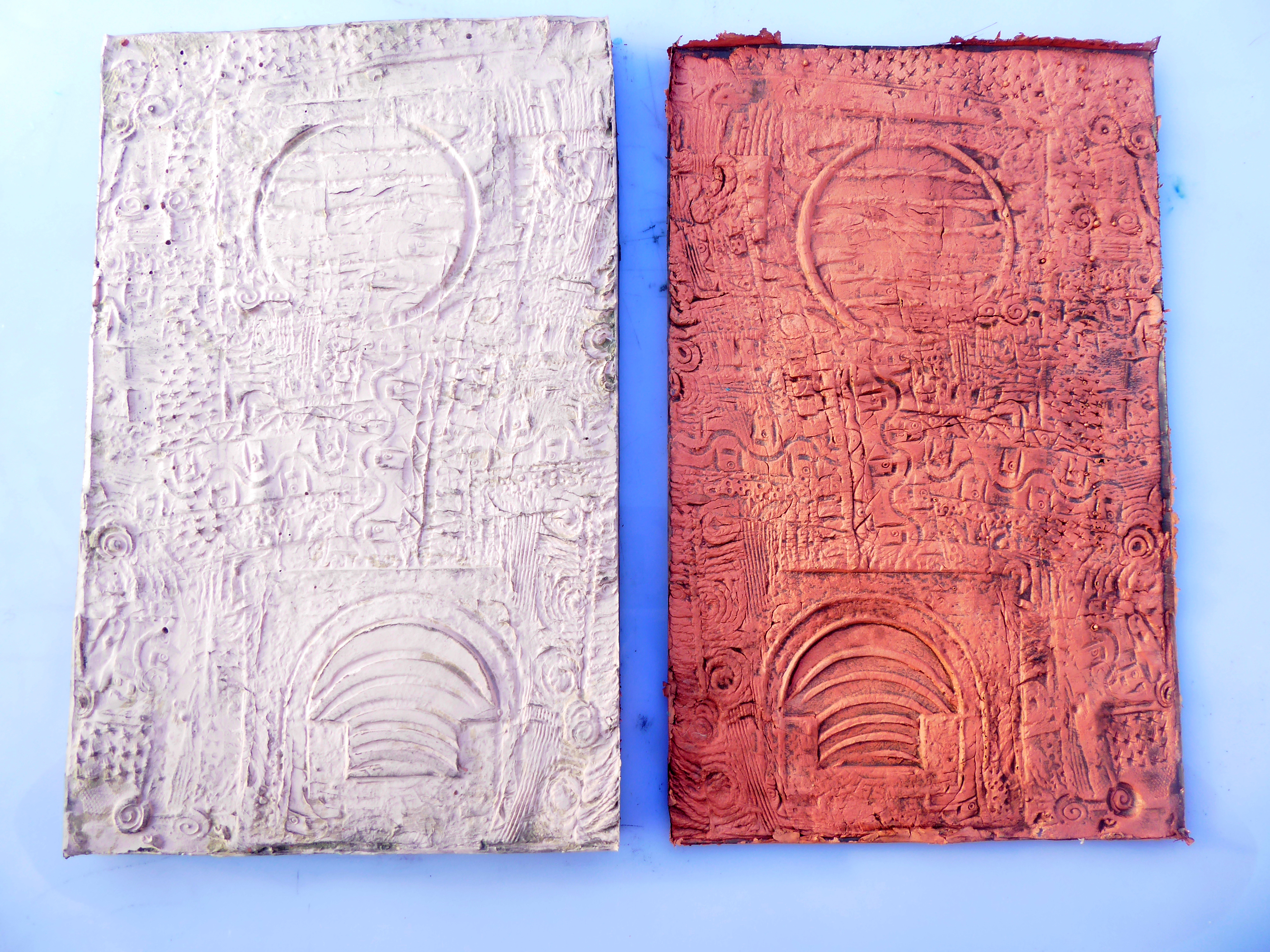
As part of the Wrexham Print Centres Harts heath Project I have made an electrotyped plate of a workbench that was estimated as being first used in the early nineteenth century. Unfortunately I was only able to take an impression from a small part of it before the bench was removed to a museum. The image on the left is the reverse of the plate which is still attached to the mould and on the right is the part of the bench from which the impression was taken from.


Collaborating with Wayne Clarke Head of Ceramics Glyndwr University in examining the use of electrolysis in making and decorating ceramic art.


Picture from Frances of the second piece of hers that we plated on Friday 11th.

Electro-forming some sculptures made by Frances Carlile from blackthorn branches.

Photograph shows one of Frances’s pieces ‘Breakwater’ standing on a piece of mine entitled ‘Tide’ Really fun creative day.
This is one of the first prints off the stereotyped plate from earlier entries in my research blog. The plate was inked up using Hayter’s viscosity method, the second colour being silver, the first being cadmium yellow deep hue . The plate is very heavily embossed, it has been through the press about twenty times and is holding out well and will certainly be good for a large edition if it was required.


The final plate has 88g of deposited copper. It will require levelling off on the underside with fibre glass filler or a low temperature metal such as pewter. Three possibilities for inking up stand out, either viscosity printing, Andrew Baldwin’s double drop technique, or as a collagraph ‘a la poupee’ .
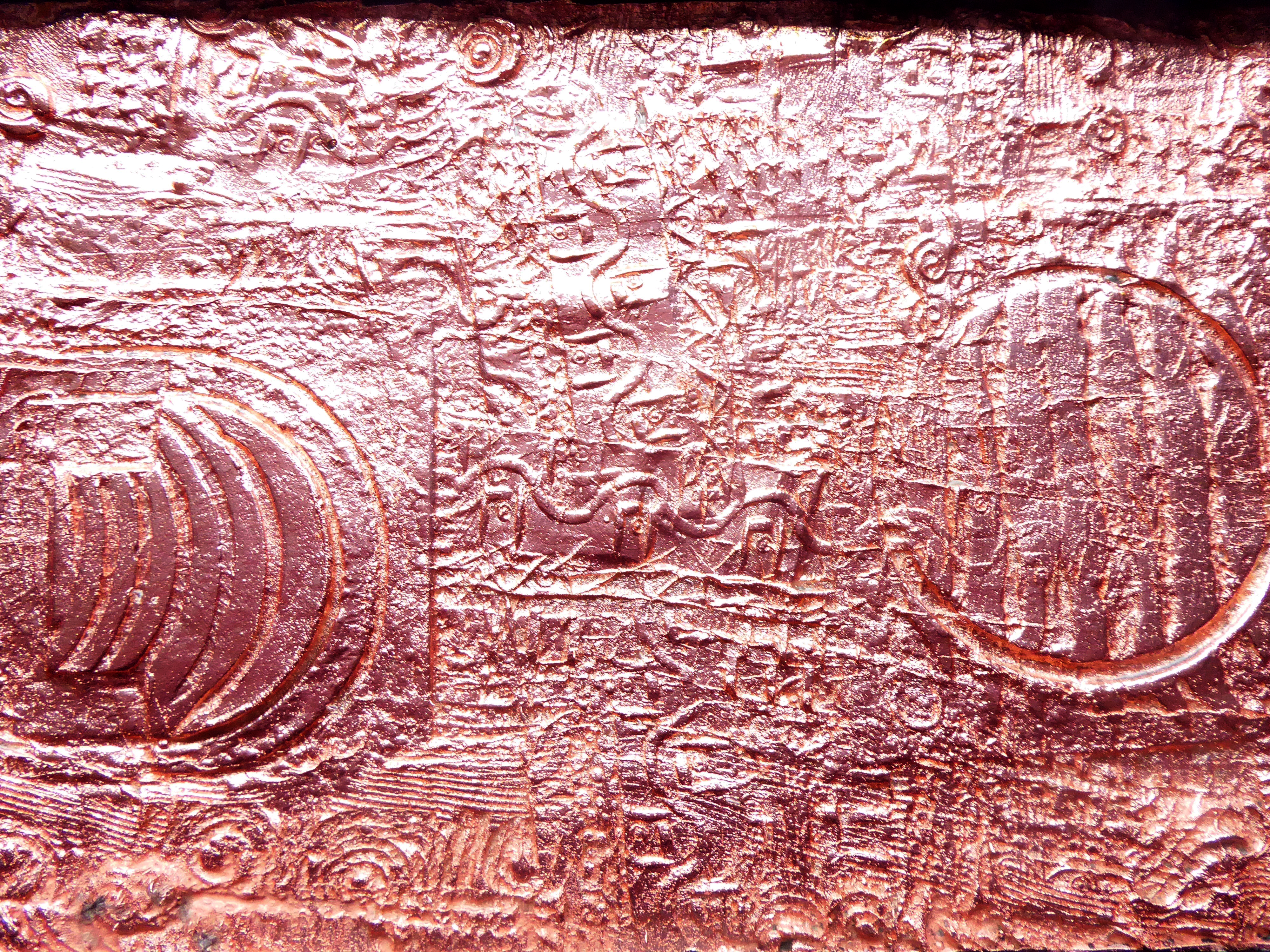
Over the last twelve hours a total of 37g has been deposited on the mandrel. The pure copper has a magical colour and to my eye it is an object of beauty in itself.

I have used the stereotype process in the past to copy etching plates, this is the first time I have used it to make a plate with the intention of printing from it. This is the back of the plate that will need to be packed to prevent the soft copper from collapsing when it passes through the press. The plan is to continue the plating process for twelve to twenty-four hours.


