Category: printmaking

  • In The Depths

    In The Depths

    In the Depths

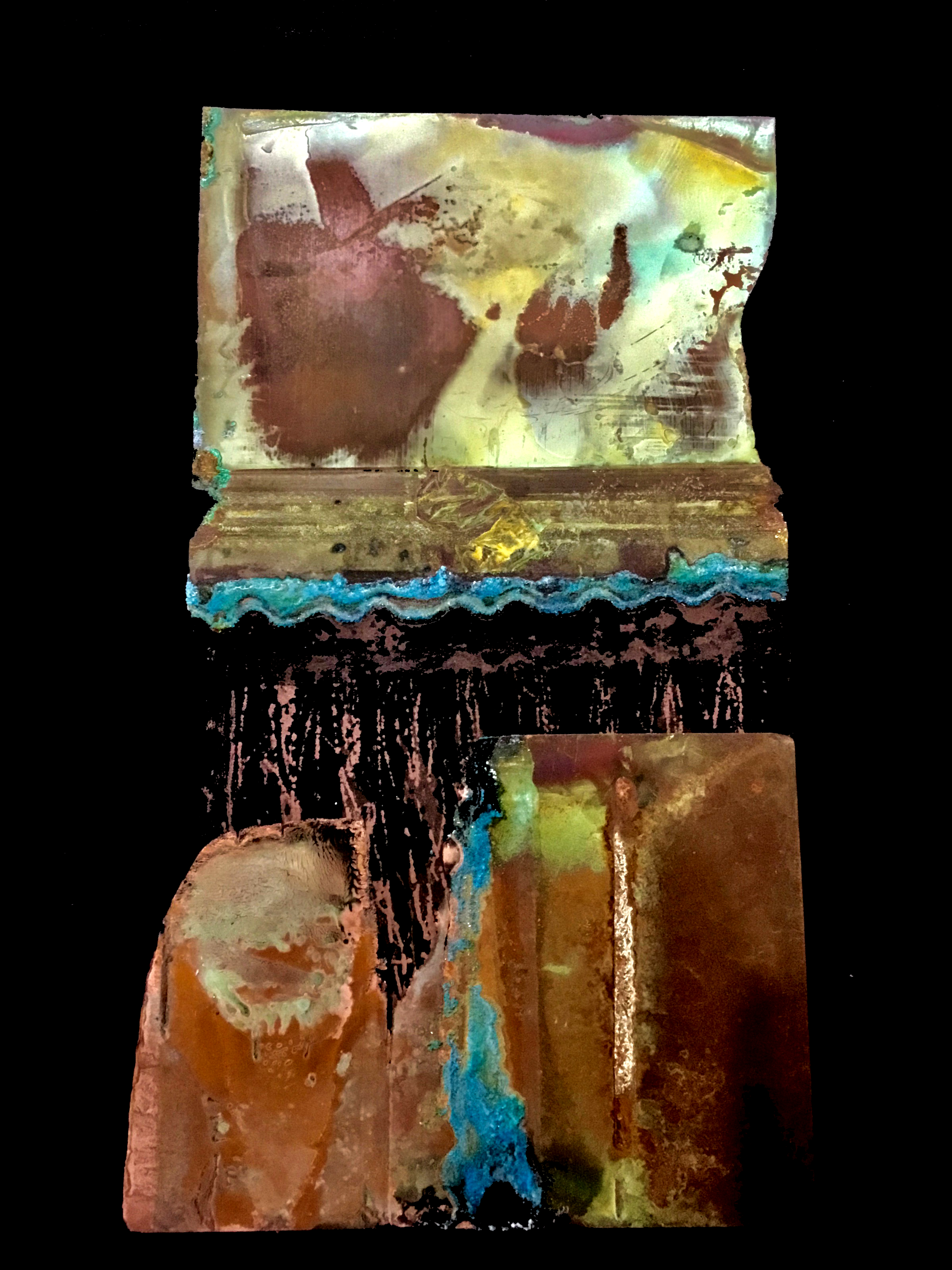
    Corroded Copper 21 x 38 cm

    Electrolytic action on copper

    In The Depths


  • Saline Sulphate & Electro- Etching Workshop Regional Print Centre Wrexham

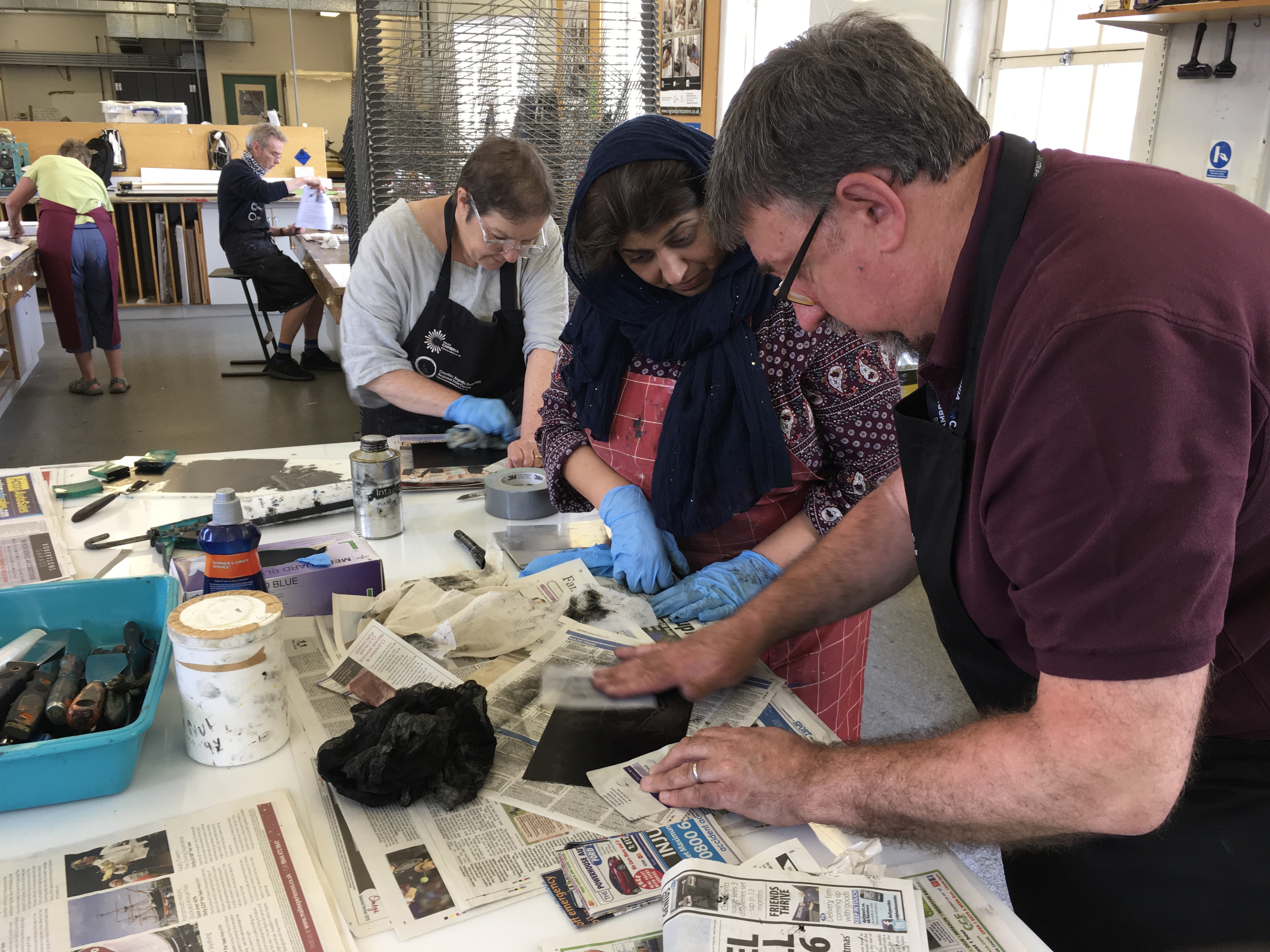
    Saline sulphate and electro-etching with Don Braisby

     1/2 June 2017

    10:00-16:00

    This workshop will teach two etching processes that can be used to etch at home or in a classroom situation, these are saline sulphate and electro-etching.

    Both processes have been described as being ‘safe etching’ however in this workshop we will focus on their potential for alternative mark making rather than on their non-toxic credentials. Don Braisby who is teaching the workshop is completing his doctoral thesis on electro-etching.

     Workshops aim:

    • Provide a simple introduction to the theory and practice of electro- etching.
    • Introduce the equipment needed for electro-etching and plating, how to set it up and use it safely.
    • Creative plate making, resists and stop outs
    • Preparation and etching of plates.

     Objectives:

    • Participants will have gained a working knowledge of both saline sulphate and electro-etching
    • To make and proof at least one plate in each process.
    • Introduced to electroforming and electrotyping as a potential process in sculpture and printmaking.
    • provide feedback for use in research.

     Non-members £120.00/Members £75.00

    Booking essential (via email or telephone)

    email: printcentre@cambria.ac.uk

    telephone: 01978 267629

  • Electro-etching steel plate

    Electro-etching steel plate

    One of the things I like about etching aluminium with saline sulphate is the great depth of etch that it is possible to get. I’ve wasted an awful lot of research time trying to get the same depth of  etch on aluminium with electro-etch. I’ve now found I can get the depth of etch I want by electro-etching mild steel, it takes a while but it is worth it.

    ← Back

    Thank you for your response. ✨

  • Print from electro-type plate and two more prints

    Print from electro-type plate and two more prints

    I made a silicon mold from one of my old plates, coated the inner surface with conductive paint and placed it as a cathode in an electrolytic cell using copper sulphate as an electrolyte. Copper formed on the inside of the mold making an exact copy of the original plate.

    print fromelectrotype


    Some more prints from the current series.

    Print16 Print17


  • another day in the print studio making prints

    another day in the print studio making prints

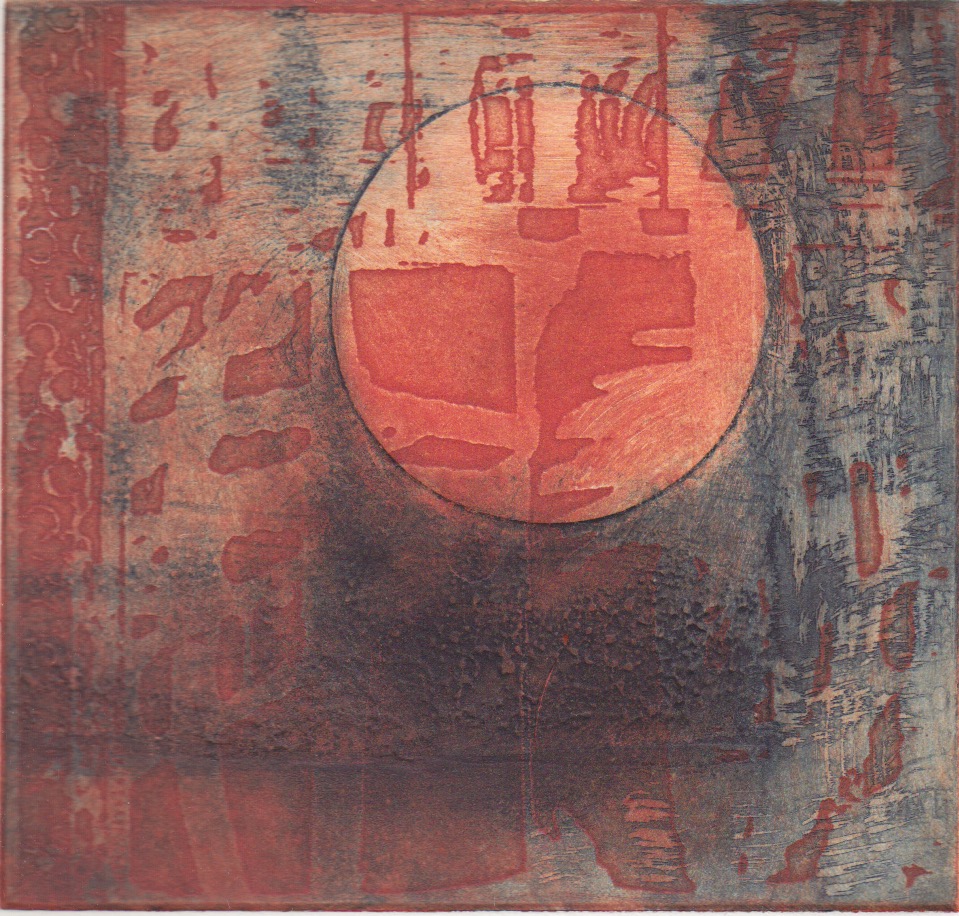
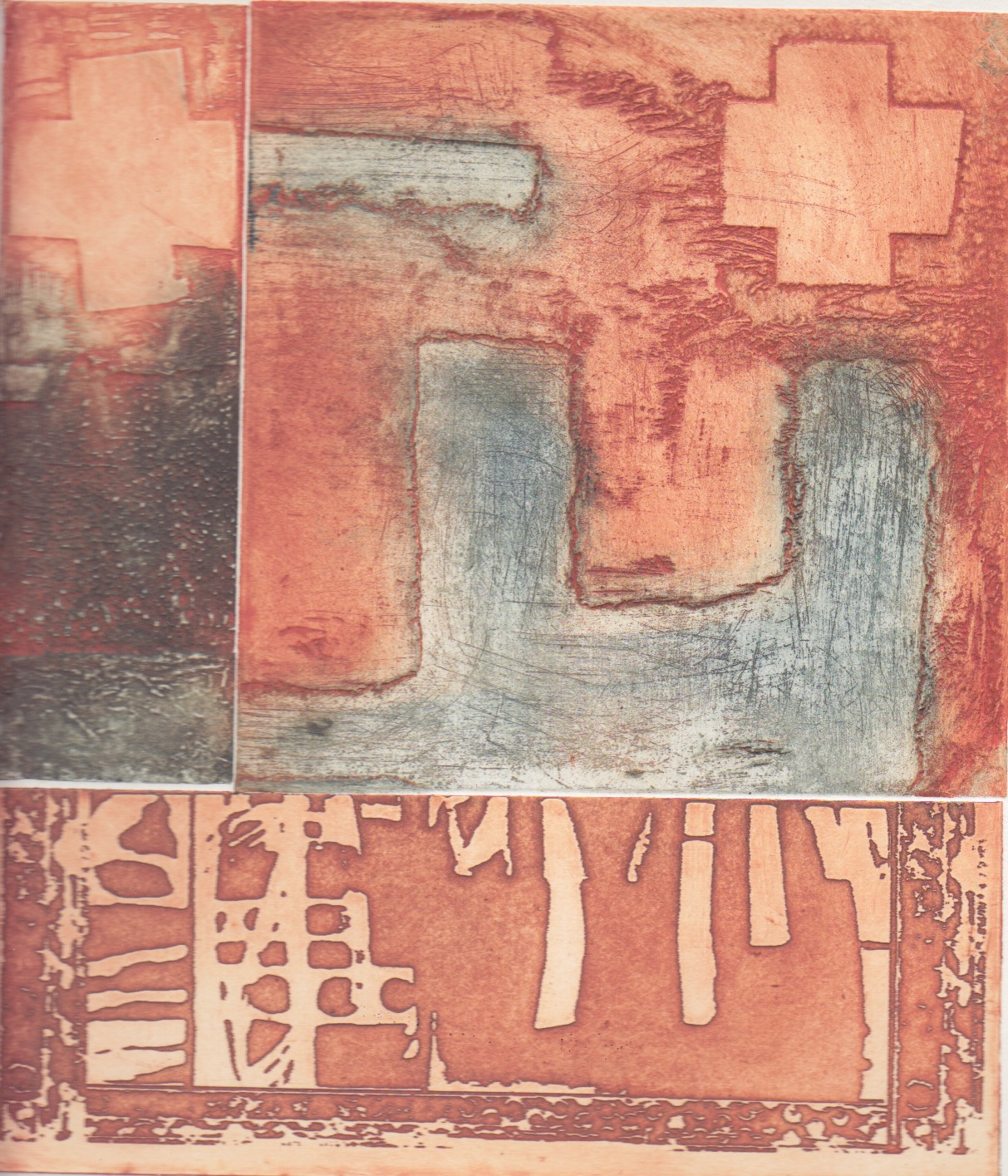
    I took four prints from each plate. The textures achieved with electro-etch respond best to being treated the same way as collagraph matrix. I’ve also been using a technique that Andrew Baldwin describes as ‘double drop’, a plate is first printed in one colour then over printed in a second colour from the same plate.

    Print14 Print15 Print12 Print13

  • Adding a new print to a growing series

    Adding a new print to a growing series

    The plates that these prints are made from started life as electro-etch test pieces. They are all made from electro-etched aluminium. It is a soft metal that etches deeply and in the areas of open bite provides a tooth that holds ink really well. Peter Wray, in his article on saline sulphate etching in Print Making Today, describes it as a natural aquatint. Although aluminium is soft the depth and quality of the etch achieved with electro-etch appears to hold out really well against the pressure of the press. I have plates that have been through the press thirty times with little effect on the quality of print obtained.

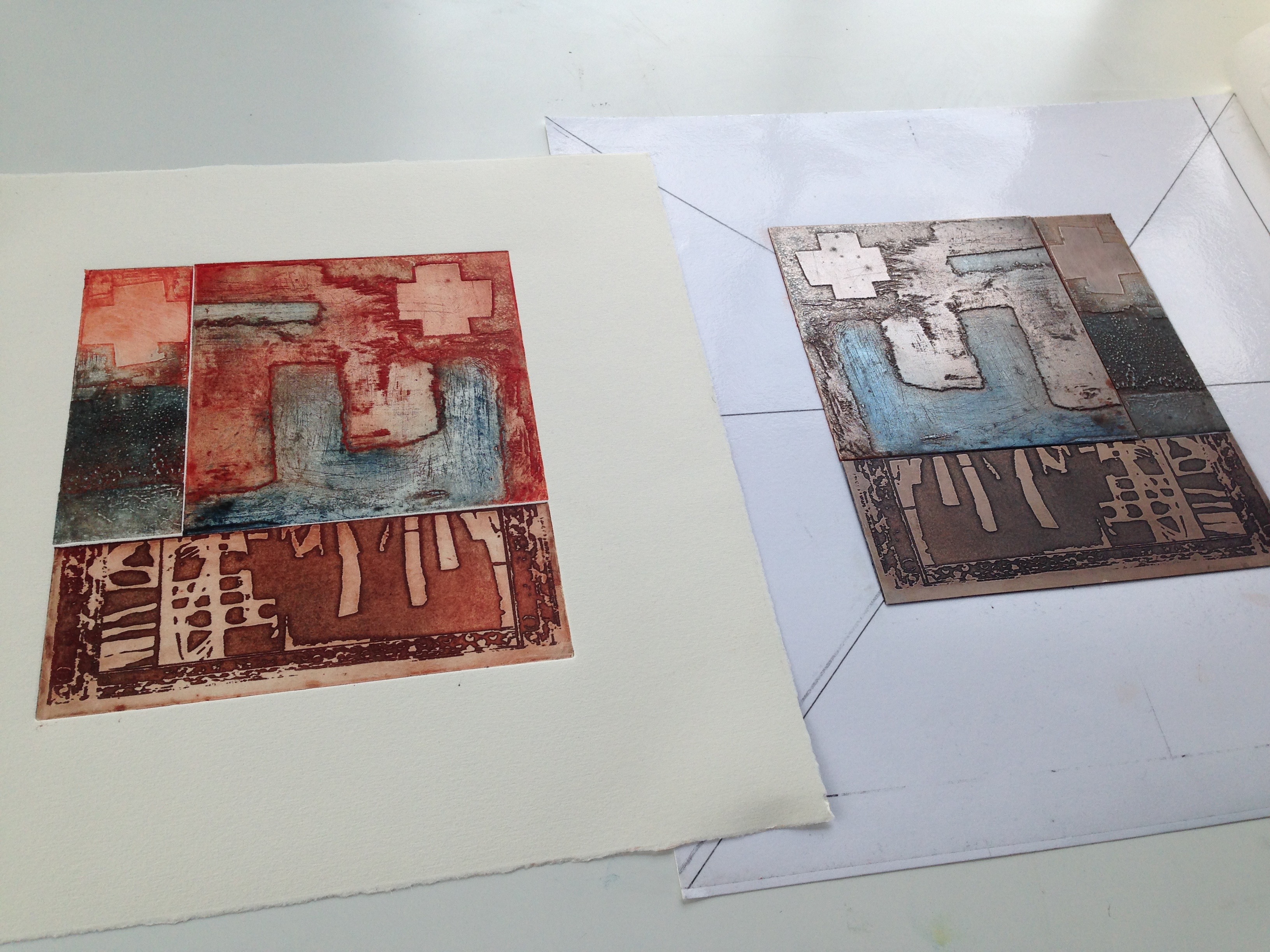
    Print11

  • Spending time in the print studio

    Spending time in the print studio

    I have been spending a lot more time in the print studio recently and have had two insights:

    1. Printmaking requires a level of mindfulness that I aspire towards rather than have achieved.
    2. Life is far to short for editioning.

    There were others of a more personal and negative disposition about competence but…

    IMG_0353IMG_0355 IMG_0356

  • Etching Is The Control Of Corrosion

    Etching Is The Control Of Corrosion

    Print10

    This zinc plate has been allowed to corrode all the way through in places. The original batteries made to produce electricity in the 1830s were made by hanging a plate of copper and one of zinc in a solution of copper sulphate. Thomas Spencer observed that copper was deposited on the copper plate (the cathode, negative pole) and that the zinc (anode, positive pole) was etched.He and John Wilson patented this process in 1840.

    This plate was made by shorting out such a battery.

    disimilar metal corrosion

error: Content is protected !!